
Leila Walter is a South African artist whose work explores the deep relationship between humans, textiles and the land. She works primarily with natural fibres and textile waste, creating handwoven and hand-pieced artworks that are both minimal and deeply layered—visually and philosophically.
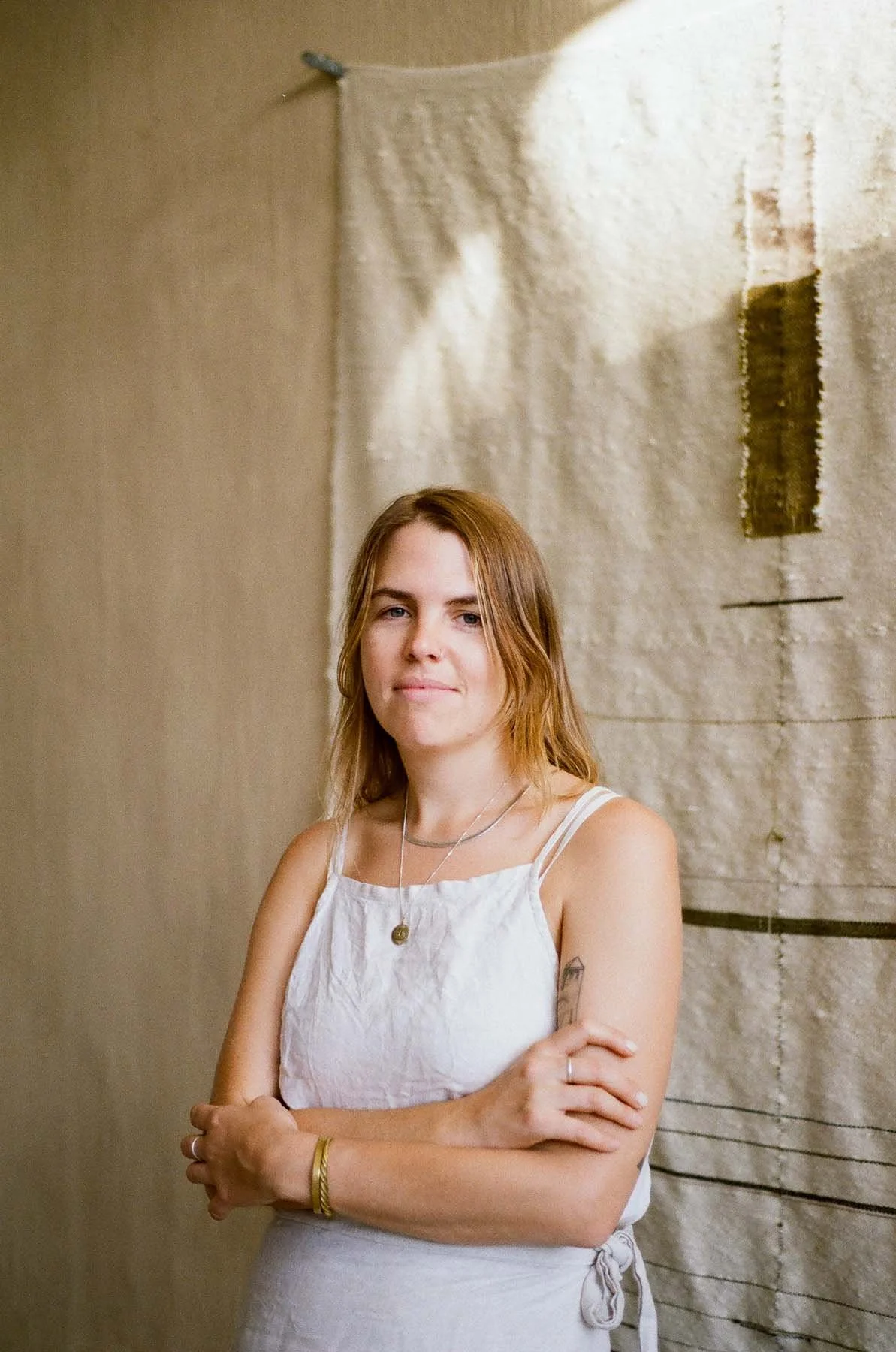
Through slow, thoughtful processes, Leila reflects on how cloth holds memory: of agriculture, of labour, of touch and of time. Her recent works use textile waste from the fashion industry woven and stitched into tapestries that resemble natural patterns of layering and sediment—reminding us that textiles, like soil, accumulate and hold history. These works speak of how our often-fleeting desire, becomes part of the earth’s archaeology.
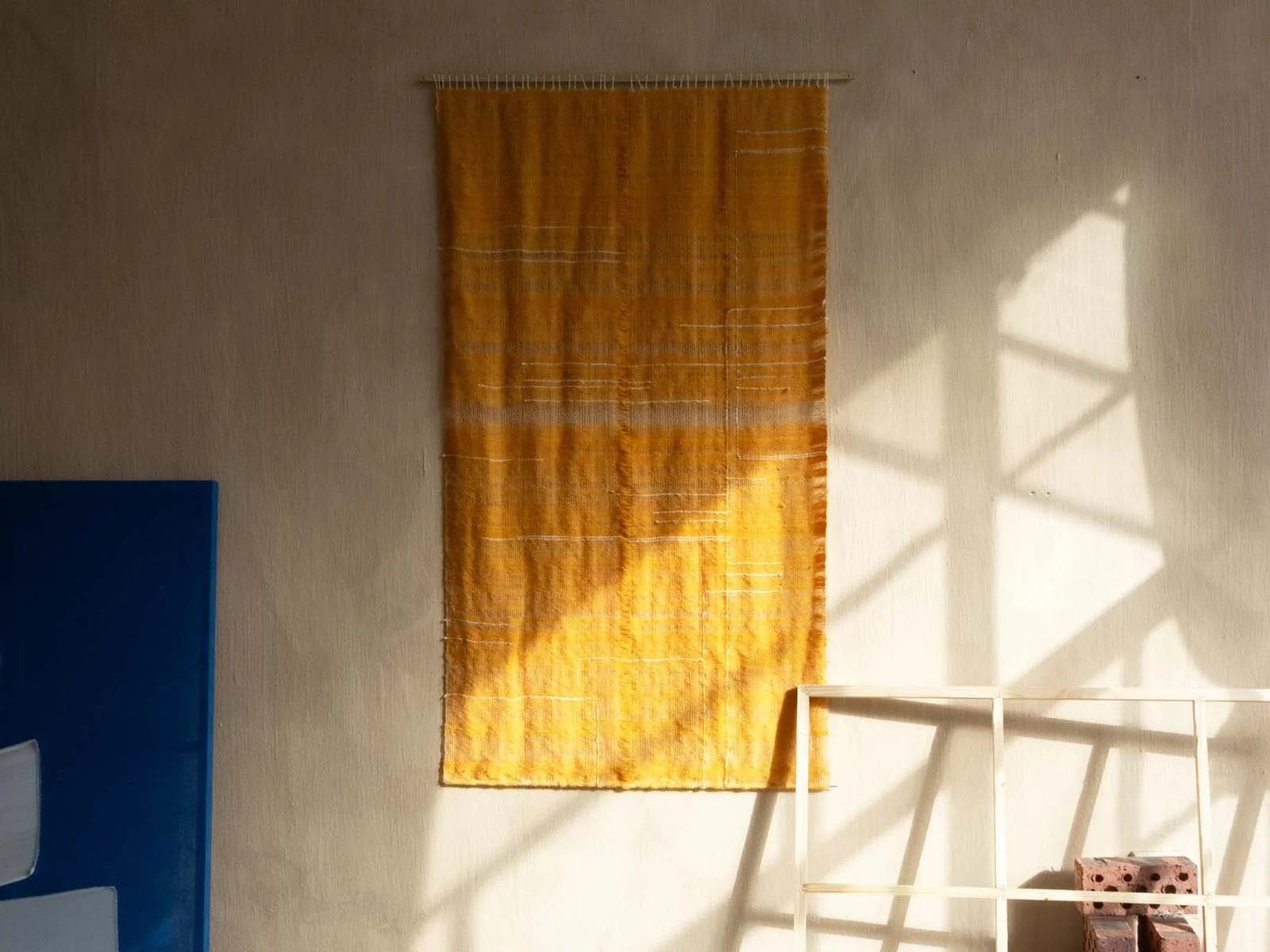
Acting in gentle counterpoint to this series, is a collection of soft, quiet mohair panels—woven by hand with fiber from goats, which metabolize the land and return inevitably to it. These works gesture towards the horizon, inviting stillness and connection. In their simplicity, they offer a window—towards the landscape and inward, to ourselves.
Leila is interested in how texture, repetition and natural pattern can create a sense of quiet cohesion. Her work invites us to slow down, to notice, and to reconnect—with the land, with our bodies, and with the beauty of creating expansive cohesion in the everyday.
Leila Walter graduated from The Michaelis School of Fine Art, University of Cape Town, in 2014. Since then, she has participated in group exhibitions in Cape Town and Johannesburg, exploring material, texture, and the intersections of textile, philosophy, and embodied experience through various mediums.
Following a trip to India in 2018, Leila founded Crosspolynations, a platform for researching traditional textiles. This platform evolved into a studio producing handwoven home textiles with an emphasis on sustainability, craftsmanship, and thoughtful design. In early 2024, the studio was rebranded as Leila Atelier as her focus shifted from home textiles to handwoven and hand-pieced works of art, redirecting her expertise in textile craft into her art practice.
Today, Leila develops collections that engage with material, memory, and presence—continuing to explore the delicate interplay between human experience, fibre, and landscape. Her work focuses on creating intentional pieces that allow for transformation: of material, of atmosphere, and of perspective, in both individual and institutional spaces.